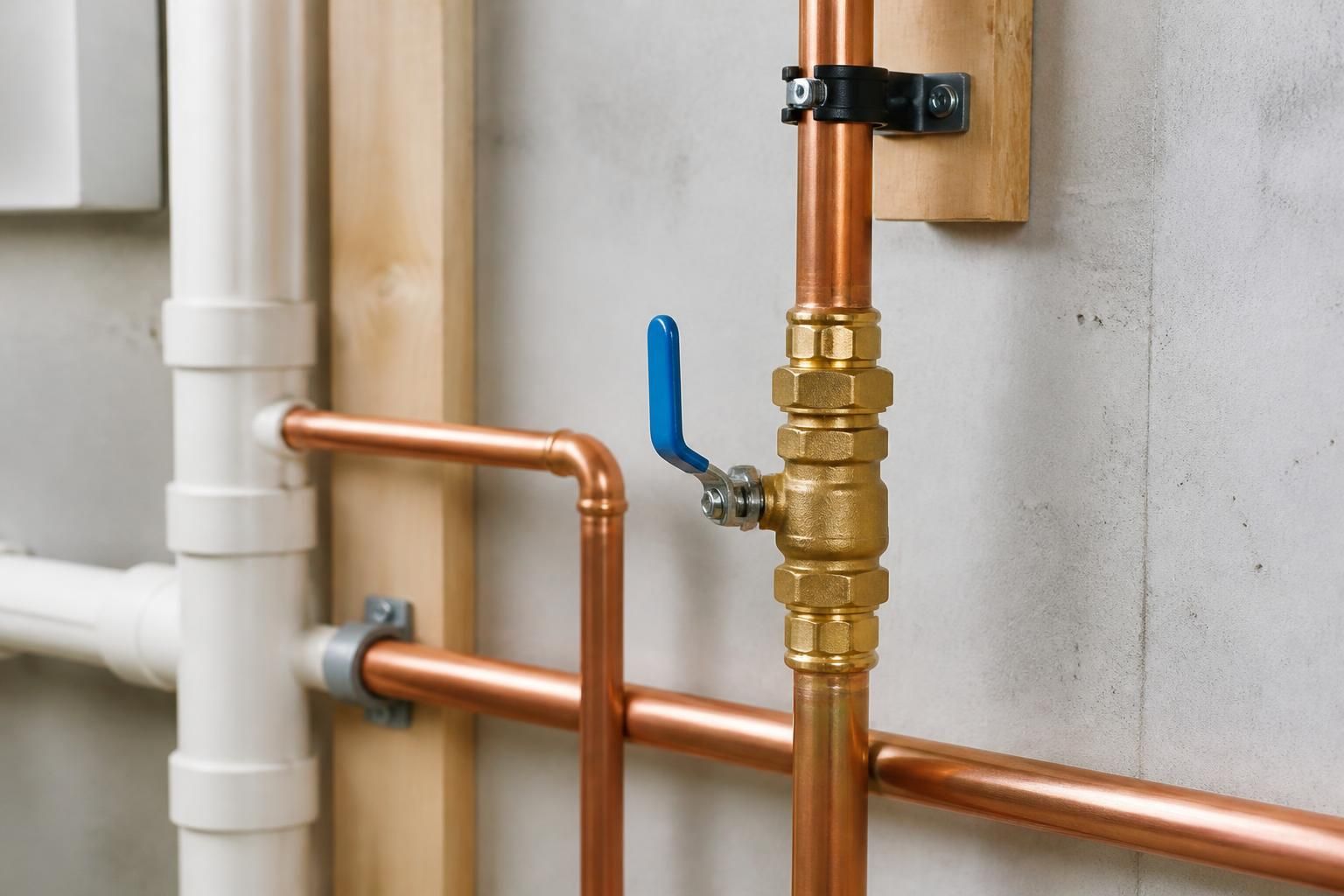
Denver Plumbing Services
Pipe Replacement
Replace damaged pipes in Denver before leaks, pressure drops, and repeated repairs get worse.
Denver Plumbing Services
Replace damaged pipes in Denver before leaks, pressure drops, and repeated repairs get worse.
If you are dealing with repeated leaks, rusty water, low pressure, or walls that show unexplained moisture, the problem may be deeper than a single bad fitting. Old or damaged pipe sections can keep causing trouble until the affected line is replaced, not patched again and again.
Ridgeway Plumbing Co helps homeowners in Denver with pipe replacement that addresses cracked, corroded, or failing lines before they create more damage. We inspect the problem area, explain what needs attention, and replace the pipe sections that are no longer reliable.
Some plumbing problems keep coming back even after repairs. That is often a sign that the pipe itself has reached the point where replacement makes more sense than another temporary fix. A damaged line can affect water quality, pressure, drainage, and the condition of nearby finishes.
Common signs a pipe may need replacement include:
If you notice one sign or several, it is worth having the line evaluated before a small problem turns into broader water damage.
Pipe replacement is not only about stopping a leak. It is also about removing a weak section of plumbing that is no longer holding up under normal use. When a line has worn out, repairs may buy a little time, but they do not remove the underlying problem.
Replacing damaged piping can help with:
At Ridgeway Plumbing Co, we focus on the section that has failed and the connections around it, so the new work is tied into the rest of the system with care.
Before replacement starts, we look at the symptoms and the pipe route so we can identify what is actually failing. That matters because a leak at one spot may be caused by a problem a few feet away, such as corrosion, a split seam, or a worn joint.
We start with what you can already see or hear. Stains, corrosion, dripping, and pressure changes help narrow the problem area. That saves time and avoids replacing more pipe than necessary.
Once the likely section is located, we examine the pipe material and its condition. Some lines fail because of age-related wear, while others crack after repeated stress or past patchwork that no longer holds.
After we understand the issue, we explain whether a section of pipe or a longer run should be replaced. We keep the recommendation tied to the problem you are actually having, not to guesswork.
Different homes can have different pipe materials, and replacement needs depend on what is already there. The right approach is shaped by the existing line, the location of the failure, and how much of the run has been affected.
We explain the option that fits the condition of the pipe so you can make a clear decision before work begins.
Pipe replacement needs to be handled with care because the affected line often connects to other parts of the plumbing system. The goal is to remove the damaged material, tie in the new section, and leave the area ready for normal use again.
Typical replacement work includes:
Ridgeway Plumbing Co handles each step with attention to the surrounding plumbing so the replacement blends into the rest of the system without unnecessary disruption.
Once the new pipe is installed, it helps to watch for changes in the area that originally showed trouble. Good follow-up means noticing if pressure improves, if staining stops spreading, and if the repaired line stays dry during normal use.
After replacement, homeowners should pay attention to:
If something does not look right after the work is complete, it is better to ask questions early than to let a small concern become a larger one.
When a pipe starts failing, the hardest part is often deciding whether to keep repairing it or move ahead with replacement. Homeowners across Denver call us when they want a direct answer about the condition of the line and the next step that makes sense.
We keep the process clear. That means we explain what we found, what can be fixed, and where replacement is the smarter route. If the pipe has reached the point where patching is no longer a solid solution, we say so plainly.
Ridgeway Plumbing Co works with homeowners who want the damaged section addressed without unnecessary back-and-forth. You get a practical plan, careful work, and a focus on the plumbing line that is actually causing trouble.
Repeated leaks, visible corrosion, low pressure, water stains, and discolored water often point to a pipe that needs replacement rather than another short-term repair.
Yes. A weak section can lead to pressure changes, leaks at nearby joints, and extra wear on connected parts of the line.
No. Some leaks can be handled with a focused repair, while others come from a pipe that has deteriorated enough to justify replacing a section or the entire run involved.
Try to note where the leak appears, when the pressure changed, and whether the water color or noise changed too. That information helps narrow the source.
Depending on where the pipe is located, some access may be needed to reach the damaged section. We aim to keep the work targeted to the area involved.
Ongoing failures often mean the pipe material is worn, corroded, stressed, or already beyond the point where another patch will hold for long.
If you need pipe replacement in Denver, Ridgeway Plumbing Co is ready to help you move from repeated problems to a clear fix. Call +15552013344 to talk through the symptoms and arrange the next step for your plumbing line.
Our Service Standard
We take time to understand the plumbing issue before recommending a repair or replacement.
We explain the work in simple terms so you can make a confident decision.
We work carefully and keep the job site tidy while completing the service.
A Few Common Questions

Share a few details about the problem or project, and our team will help you figure out the best next step.